
Why Acoustics Matter More in a Home Classroom
Traditional school buildings are engineered for acoustics. Home classrooms rarely are. Hard floors, bare walls, and open floor plans create echo and ambient noise that accumulate over a school day — making it harder for children to concentrate, harder for parents to instruct, and harder for everyone to sustain focus through the afternoon.
Cork’s cellular structure — millions of tiny sealed air chambers — absorbs sound waves rather than reflecting them. Even a partial cork wall installation measurably reduces echo and softens the acoustic environment of a room. The result isn’t silence; it’s a calmer, less fatiguing space where voices carry clearly without bouncing.
Unlike foam acoustic panels or synthetic soundproofing materials, cork does this without off-gassing, without fire risk, and without looking like a recording studio. It looks like a considered design choice. And because Manton cork is also a tacking surface, it pulls double duty: acoustic treatment and active display wall in a single installation.
Where to Install Cork for Maximum Acoustic Benefit
The Primary Teaching Wall
The wall the children face during instruction is the highest-impact surface for acoustic treatment. A full cork installation here absorbs sound at its source — where voices, audio, and activity are concentrated — and reduces the echo that typically bounces back across the room.
Opposite Walls in Open Spaces
In larger rooms or open-plan spaces, cork on two facing walls creates a significantly quieter environment. Sound that escapes the primary teaching wall is absorbed on the return rather than continuing to bounce.
Shared Walls with Other Living Spaces
For home classrooms that share walls with kitchens, living rooms, or other active areas, a cork installation on the shared wall reduces sound transmission in both directions — keeping school noise from disrupting the household and keeping household noise from disrupting class.
Basement and Low-Ceiling Rooms
Converted basement spaces are common home classroom locations, but their hard surfaces and low ceilings create challenging acoustics. Cork on walls — and optionally on ceiling sections — makes a substantial difference in these environments, reducing the cave-like echo that makes extended learning sessions tiring.
Quiet Work Corners
A dedicated quiet corner with cork on two or three surfaces creates a noticeably softer acoustic environment for independent reading, writing, or concentration work — even within a larger, more active room.
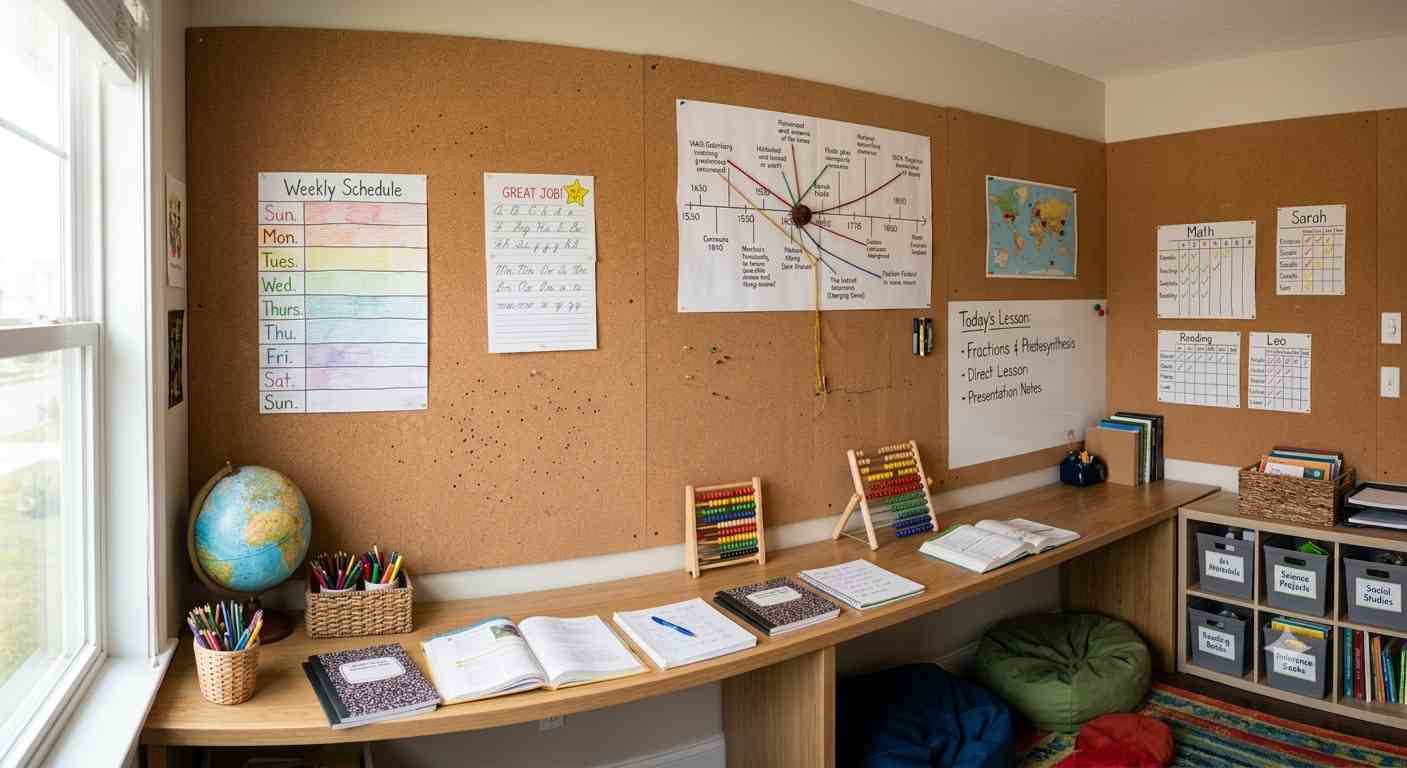
Cork for Home Classrooms
Manton Cork products are built for the demands of the home classroom, including multi-child scheduling, curriculum display, project tracking, and acoustic comfort. Natural, non-toxic, fire-resistant, and ready to use the moment it’s installed.
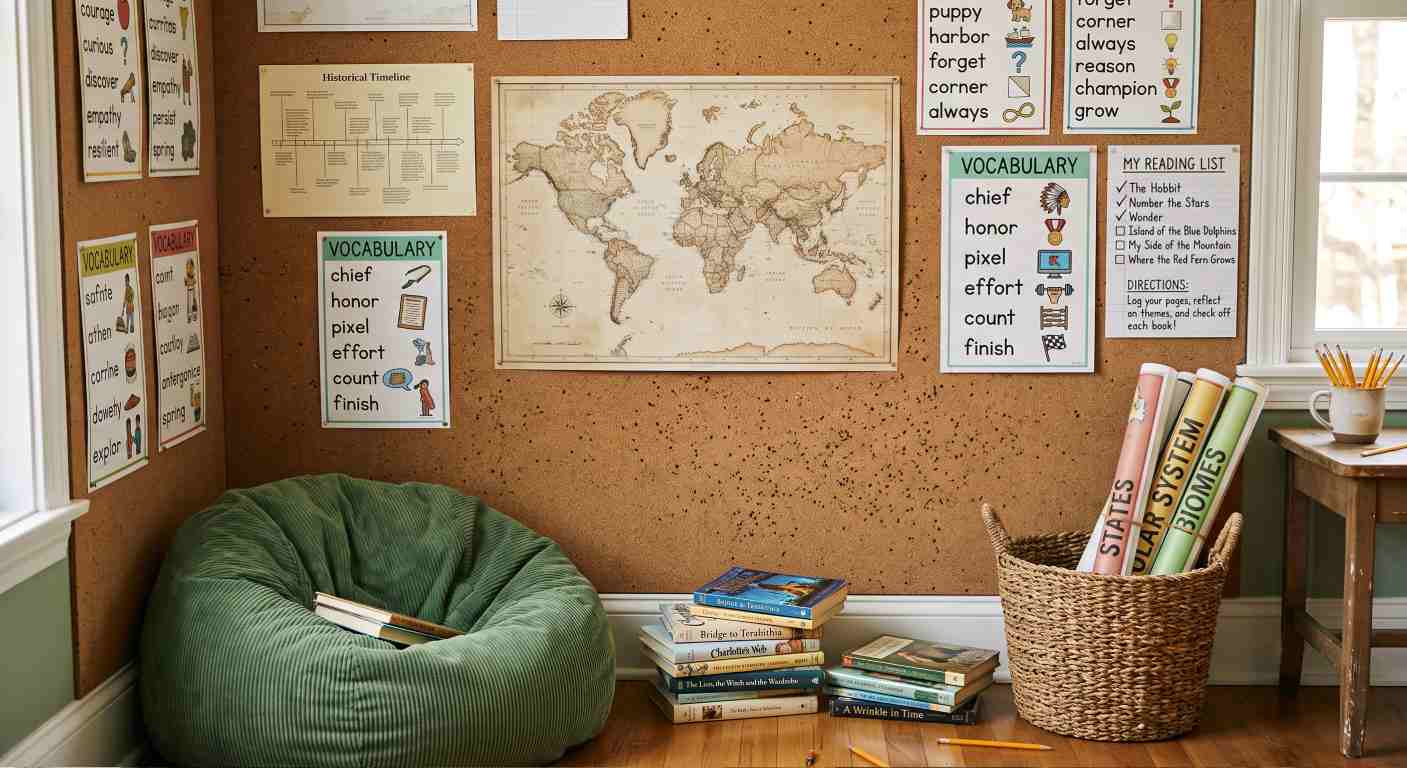
The Home Classroom Wall
A cork wall is the operational center of any home classroom. Display lesson plans, curriculum maps, student work, and schedules on a surface that’s durable, pinnable, and ready to use. Configurations for one child or many.
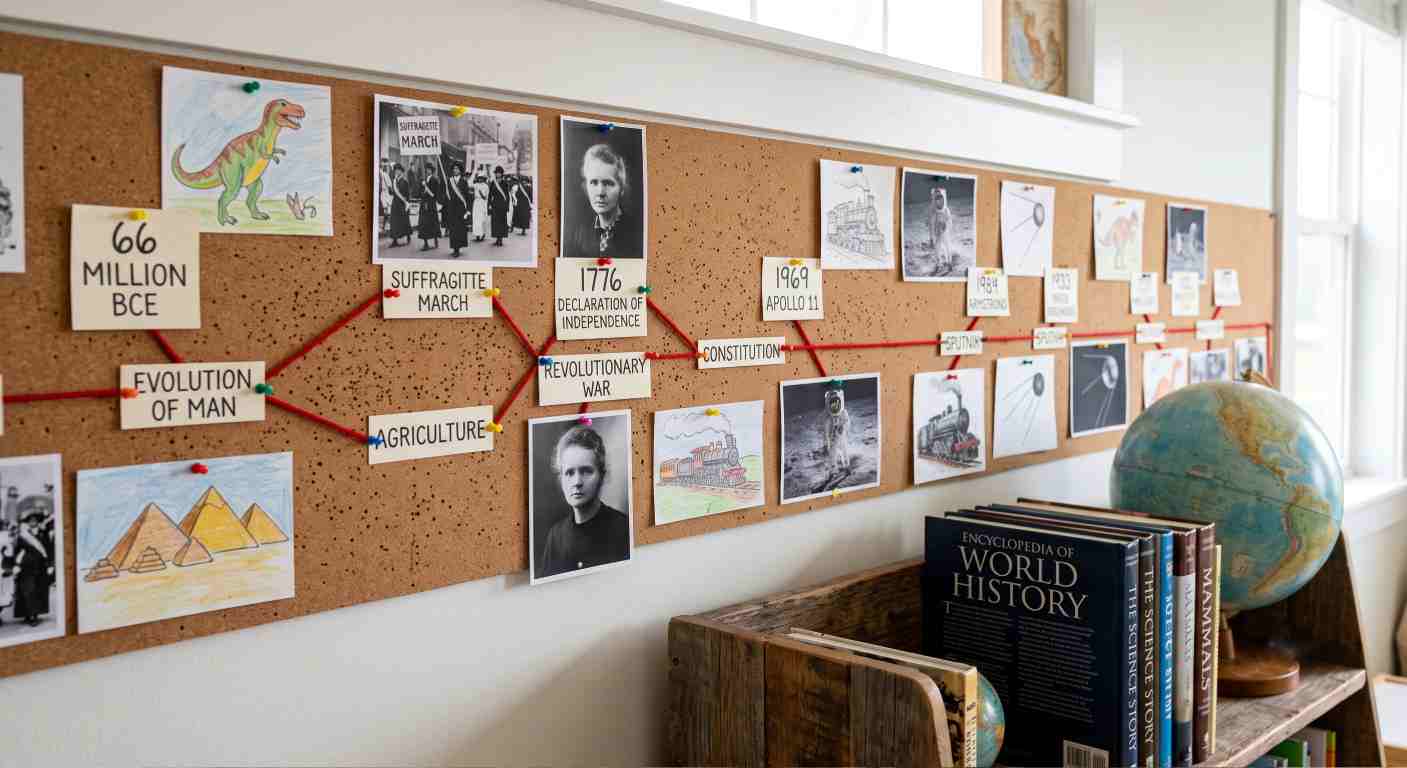
Cork Projects for the Home Classroom
Build curriculum displays, subject stations, timeline walls, and student portfolios with Manton Cork. Hands-on projects serve a teaching purpose and can be rebuilt, rearranged, and updated as your curriculum evolves.
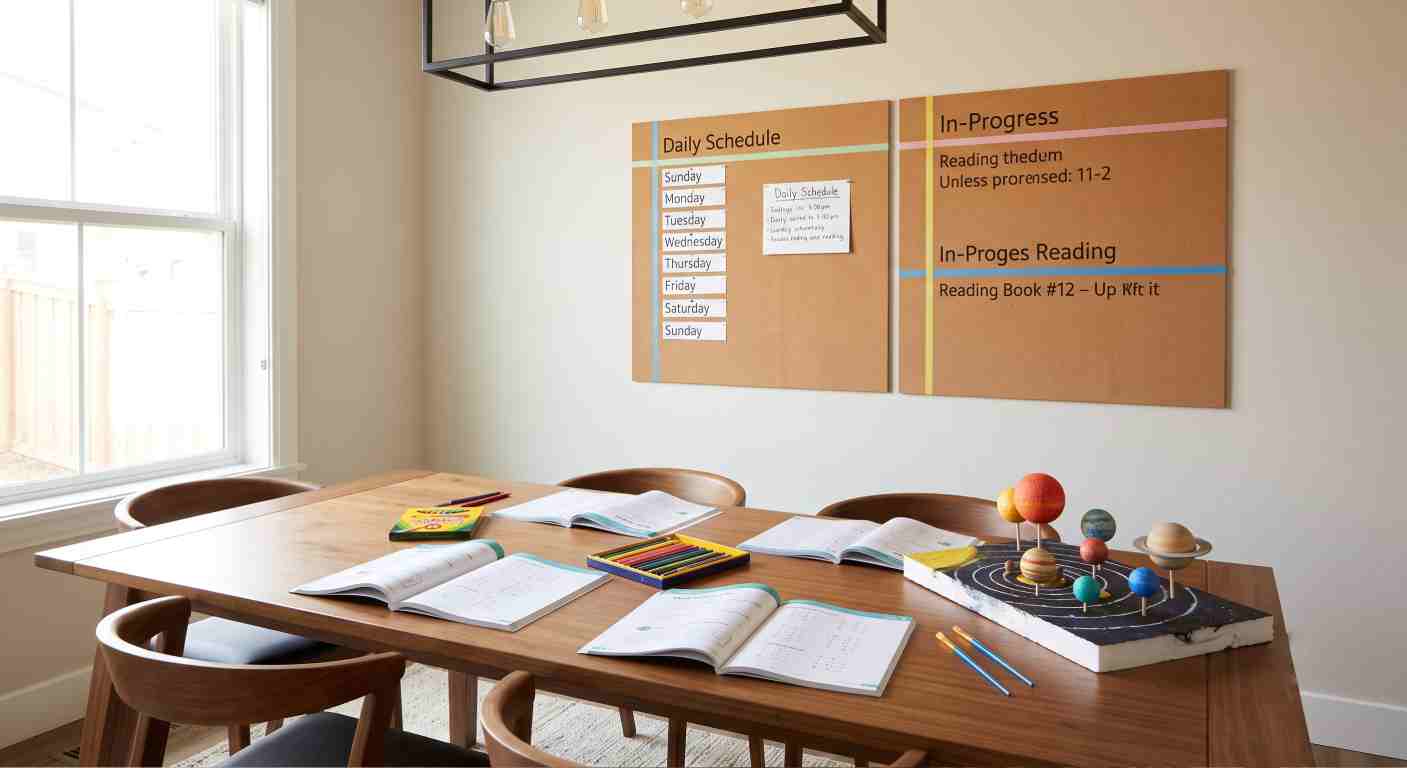
Planning Your Home Classroom Space
Dedicated school room or kitchen table, Manton Cork adapts to the way your family learns. Explore configuration ideas for full rooms, shared spaces, multiple children, and small-footprint setups that don’t require a dedicated room.