
There Is No Single Right Setup
One of the first things experienced homeschool families learn is that the imagined school room — desks in rows, a teacher’s board at the front, supplies organized by subject — rarely matches how their family actually learns. Some families use a dedicated room from the start. Others find that the kitchen table, the living room floor, and a few consistent surfaces distributed around the house work better. Most land somewhere in between, and it evolves as children get older.
Cork adapts to all of these configurations. It can cover an entire room or a single wall. It can be one continuous surface or several independent boards placed where learning naturally happens. The following ideas address the most common home classroom setups.
The Dedicated School Room
If you have a room designated for homeschooling, the walls are your most valuable and underused resource. A full feature wall of cork — covered in tiles or roll — gives you an operational command center: curriculum display, scheduling, subject reference, and student work all in one place. A second wall of cork, opposite or adjacent, dramatically improves the room’s acoustics, reducing the echo that accumulates in a room where instruction, read-alouds, and discussion happen all day. Consider installing cork from desk height to ceiling on the primary teaching wall, and a narrower band at child height on a secondary wall for student-managed boards.
The Converted Room (Dining Room, Playroom, Guest Room)
Many home classrooms occupy spaces with another primary function. Cork installation here needs to work within that constraint. A single feature wall of cork — the wall least visible from the room’s other use — provides the core teaching and display surface without overwhelming the space. Because cork has a warm, natural appearance, it reads as intentional décor rather than institutional equipment. Modular tiles allow you to configure exactly the coverage you need and expand it over time.
The Multi-Use Family Space
For families who school at a kitchen table, in a family room, or in a shared space, the key is establishing consistent visual anchors that signal “school is happening here.” A cork strip or bulletin board mounted at a fixed location — on a wall near the table, on the inside of a pantry door, on a section of a hallway wall — becomes the stable reference point around which the school day is organized, even when the physical workspace shifts.
Multiple Children at Different Grade Levels
This is where cork’s flexibility becomes most valuable. Divide a large cork surface into clearly defined sections — one per child. Each child’s section holds their own schedule, current assignments, and reference materials. Sections can be different sizes if workloads differ significantly. This keeps each child’s materials visually separated and gives each student a sense of ownership over their workspace, even within a shared room. For families with four or more children, a long horizontal run of cork roll along one wall — divided by colored tape borders — is the most space-efficient solution.
Small Spaces and Apartment Homeschooling
Homeschooling in a small home or apartment requires every surface to earn its place. Cork tiles mounted on the inside of cabinet doors, on the back of a bookshelf, or on a single wall section behind a fold-down desk maximize functional surface area without claiming floor space. A small cork board at each child’s primary workspace keeps essential reference materials at eye level without requiring a dedicated room.
How Much Cork Do You Need?
A useful starting point: measure the wall space above and around your primary work surface and plan for full coverage of that zone first. This is where display materials will be most used and most visible. From there, additional coverage — whether for acoustic benefit, subject stations, or secondary workspaces — can be added incrementally. Cork is one of the few wall materials that can be expanded over time without visible seams or mismatches, because its natural variation means new tiles blend naturally with existing ones.
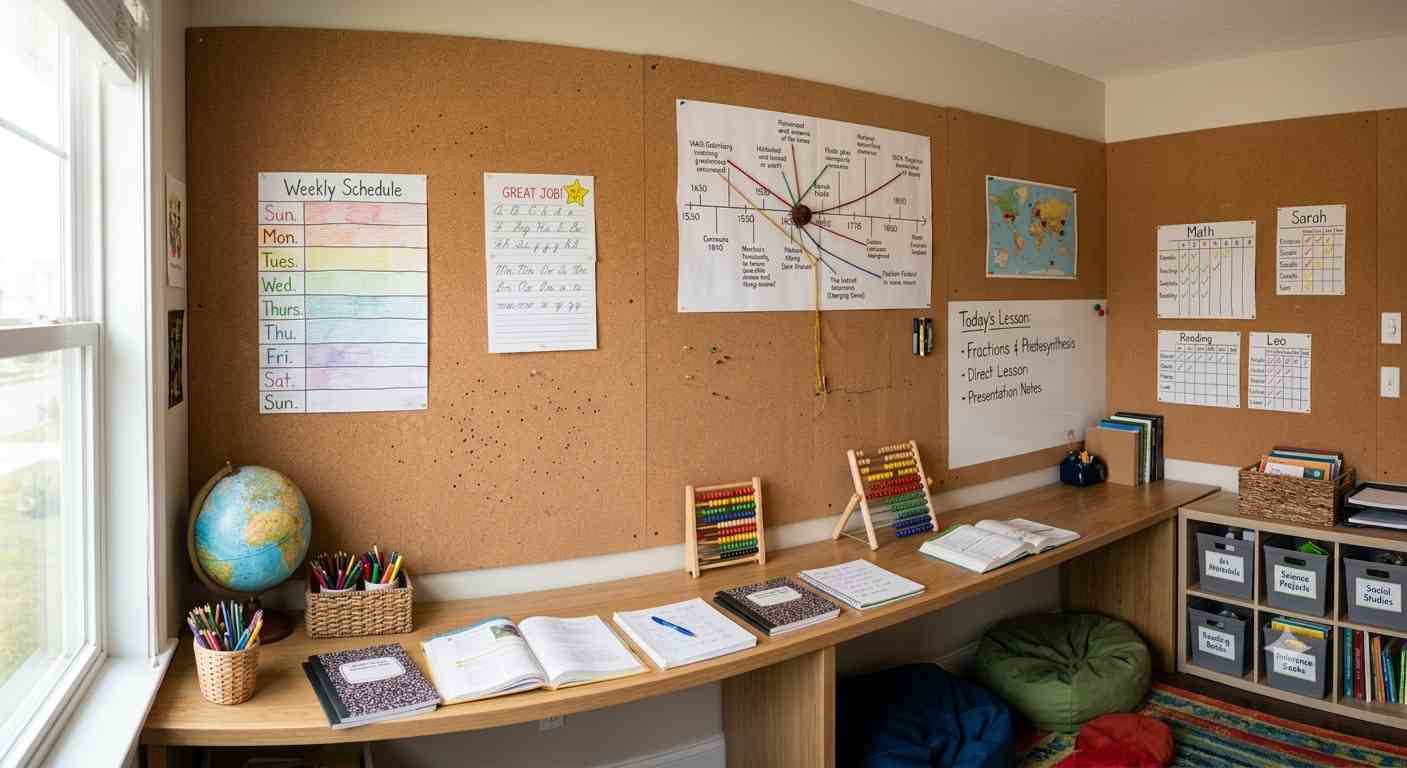
Cork for Home Classrooms
Manton Cork products are built for the demands of the home classroom, including multi-child scheduling, curriculum display, project tracking, and acoustic comfort. Natural, non-toxic, fire-resistant, and ready to use the moment it’s installed.
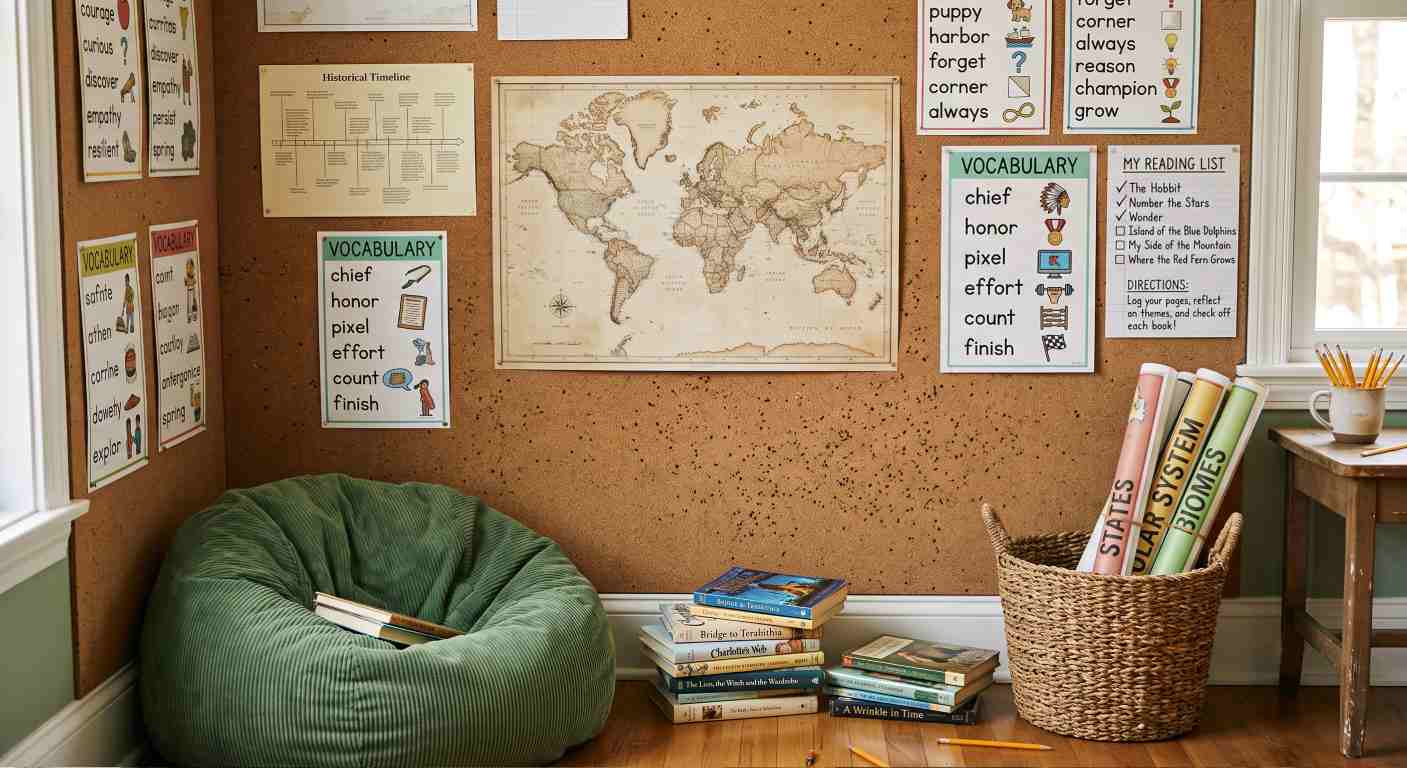
The Home Classroom Wall
A cork wall is the operational center of any home classroom. Display lesson plans, curriculum maps, student work, and schedules on a surface that’s durable, pinnable, and ready to use. Configurations for one child or many.
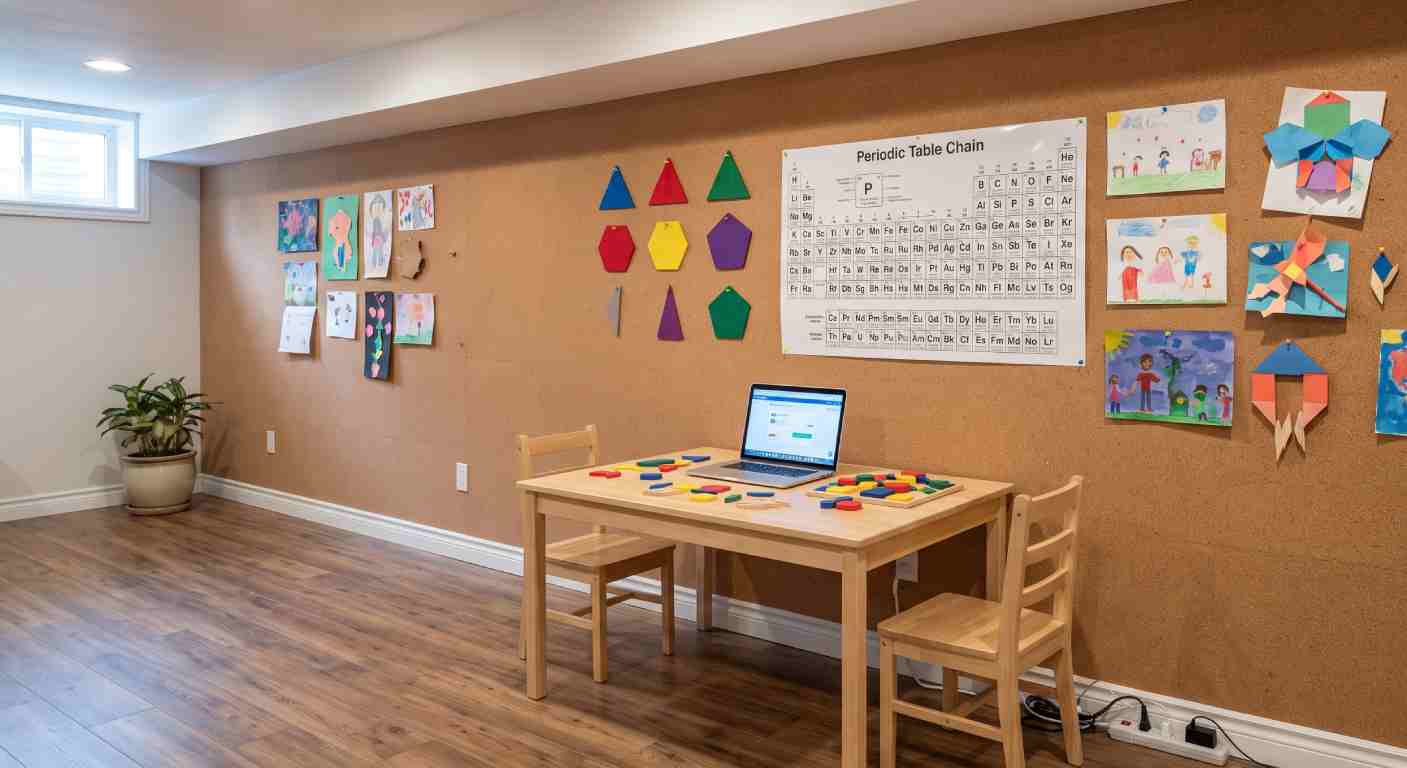
Acoustic Comfort in the Home Classroom
Hard surfaces create echo and ambient noise that disrupt concentration and make instruction harder. Cork wall tiles naturally absorb sound without synthetic materials, off-gassing, or compromising appearance, creating a calmer room for better learning.
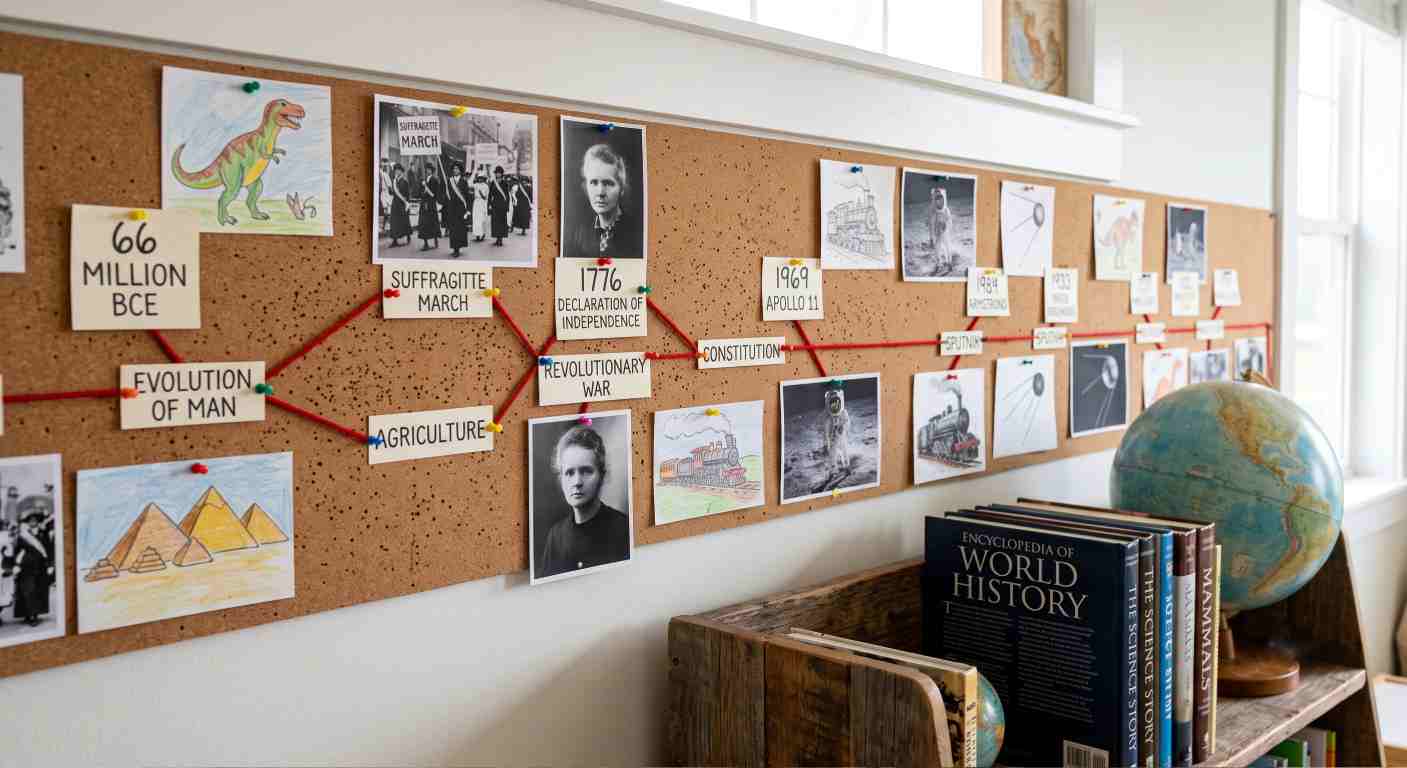
Cork Projects for the Home Classroom
Build curriculum displays, subject stations, timeline walls, and student portfolios with Manton Cork. Hands-on projects serve a teaching purpose and can be rebuilt, rearranged, and updated as your curriculum evolves.